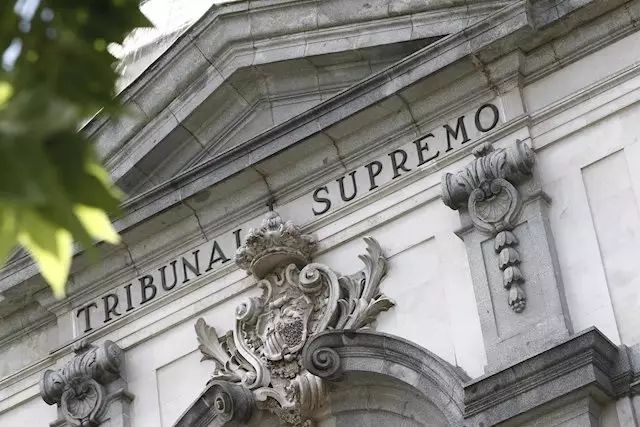
The judgment no. 418/2026, handed down yesterday by the Second Chamber of the Supreme Court, stands as one of the most significant rulings on public corruption in Spain's recent legal history. The facts tried before the Court, spanning the period from 2019 to 2022, centred on the use of the institutional position held by the then Minister of Transport to advance private interests in exchange for financial consideration.
The sentences
Following fourteen sessions of oral proceedings, the High Court has convicted José Luis Ábalos to twenty-four years' imprisonment for the offences of criminal organisation, bribery, trading in influence, and misappropriation of public funds. Koldo García has likewise been convicted to nineteen years and eight months' imprisonment for his participation in the same criminal structure. Both defendants were, however, acquitted of the charges of malfeasance in public office, misuse of insider information, and documentary fraud for which they had also been indicted.
These figures must nonetheless be qualified. The application of the rules on cumulation of sentences significantly limits the maximum effective period of imprisonment, so that neither Ábalos nor Koldo García may serve more than fifteen years.
The case of Víctor de Aldama: cooperation with the authorities
The businessman Víctor de Aldama has been sentenced to custodial terms which, in aggregate, amount to four and a half years. The Chamber has, however, ordered the suspension of their execution upon finding an analogous mitigating circumstance of confession and cooperation with the authorities, deemed highly significant. The reduction of the sentences — which varies depending on the degree of cooperation the Court attributes to Aldama, resulting in a reduction of one or two degrees — means that no individual sentence imposed exceeds two years' imprisonment. It is this fact which, as the Chamber itself reasons, opens the door to the extraordinary suspension provided for under Article 80.3 of the Criminal Code, an exceptional regime that permits the suspension of execution even where the aggregate total of the sentences exceeds that threshold.
The ruling thereby reinforces the role of effective cooperation as an instrument for the investigation of complex criminal structures: a full and corroborated confession can substantially reduce sentences, to the point of enabling their suspension. The Chamber considers Aldama's contribution decisive in establishing the facts, whilst noting that the conviction does not rest exclusively on his testimony. Alongside it, the judgment highlights extensive documentary evidence, telephone intercepts, accounting records, and other objective elements that consistently corroborate his account and reinforce its probative value.
The criminal organisation
The proven facts describe a stable organisation composed of three individuals with clearly differentiated roles. Ábalos provided the capacity for influence derived from his position as Minister and Secretary of Organisation of the PSOE; Koldo García acted as operator and operational liaison, managing payments and transmitting instructions; and Víctor de Aldama recruited businesspeople seeking preferential treatment in the award of public contracts and channelled the financial consideration. The activity was directed principally at entities under the Ministry of Transport, such as ADIF, Puertos del Estado, RENFE, INECO, and TRAGSATEC.
The characterisation of this structure as a criminal organisation within the meaning of Article 570 bis of the Criminal Code is one of the most significant legal aspects of the ruling. Unlike other forms of associative criminality, this offence arises in real concurrence with the remaining offences committed, requiring them to be sanctioned separately and substantially increasing the overall criminal culpability.
The "masks" episode
Among the most significant episodes of the scheme is the award of contracts for the supply of face masks during the state of emergency declared in March 2020. The judgment places at the centre of the operation the procurement carried out by ADIF and Puertos del Estado with the company Soluciones de Gestión y Apoyo a Empresas S.L., driven by the actions of Víctor de Aldama and Koldo García. According to the proven facts, these transactions were associated with the payment of substantial illicit commissions.
Trading in influence versus malfeasance in public office
Particularly noteworthy is the acquittal on charges of malfeasance in public office in respect of certain administrative decisions, in relation to which trading in influence is nonetheless established. The Chamber takes the view that there was a genuine and urgent public need to acquire medical supplies during the pandemic, and that the decisions taken cannot therefore be characterised as arbitrary or manifestly unjust — an indispensable requirement for the offence of malfeasance in public office to be made out. The Chamber does, however, find it proven that certain contract awards were furthered through undue pressure and influence. The distinction is technically coherent: trading in influence penalises the illegitimate distortion of the decision-making process, whereas malfeasance in public office requires that the final resolution be objectively unjust.
Misappropriation
Equally significant is the conviction for misappropriation arising from the fictitious employment of the then Minister's partner by the public entities INECO and TRAGSATEC. According to the judgment's proven findings, she received remuneration charged to public funds without effectively performing the functions for which she had been engaged.
What comes next?
From a procedural standpoint, it is not immaterial to note that the status of José Luis Ábalos as a fuero holder meant that the case was tried at first and only instance by the Second Chamber of the Supreme Court. This precludes an ordinary appeal and leaves open only the extraordinary avenues of an amparo application before the Constitutional Court and, eventually, an application before the European Court of Human Rights. Neither of these avenues permits a full review of the facts as found proven.
It remains to be seen what strategy the defence teams will pursue, and what realistic prospects exist for any eventual review of the convictions. Although the procedural avenues are not entirely exhausted, the judgment already constitutes a pronouncement of enormous legal and political consequence.